PRESERVATION SYSTEMS
The systems of Preservation were designed for one purpose: keeping humanity alive even when the civilization outside no longer existed.
Human Preservation Chamber Systems protect the sleeping population, while medical and biological networks maintain long-term stability. Environmental Life Support regulates the conditions required for human survival, and the Preservation Energy Network supplies critical infrastructure through distributed reserves.
Autonomous Maintenance, Resource Recycling, Internal Transit, Communication Relay, Monitoring, Structural Integrity, Genetic Identity, and Surface Monitoring Systems allow the complex to continue operating without a conventional human population maintaining it.
Many of these systems also contain fragments of the nine guardian intelligences. Preservation therefore does not function through automation alone — parts of the minds that helped create and protect it continue living within its infrastructure.
- 4Page 4
External Surface Monitoring System
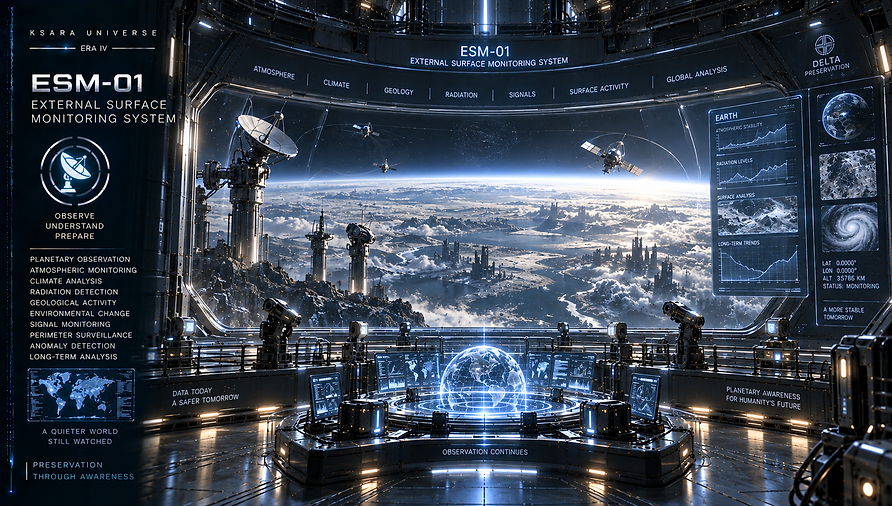
External Surface Monitoring System maintained Preservation's awareness of the world beyond its protective layers. Hardened sensors, geological arrays, atmospheric instruments, remote observation systems, and surviving external monitoring stations continuously measured the condition of Earth while direct human observation remained impossible.
ㅤ
The system monitored atmospheric composition, radiation, seismic activity, temperature patterns, water conditions, chemical contamination, environmental change, unusual energy behavior, and technological signals. Short periods of improvement were never treated as proof that the surface had become safe; long-term stability had to be demonstrated across multiple systems before human return could even be considered.
ㅤ
External data remained heavily isolated from critical internal infrastructure so that corrupted or unknown influences could not move directly into Preservation. Across millennia, the network watched the world above transform while humanity slept below. Its records eventually confirmed a difficult truth: survival inside Preservation had succeeded, but returning nearly one hundred million people directly to Earth remained another problem entirely.
Structural Integrity Monitoring System
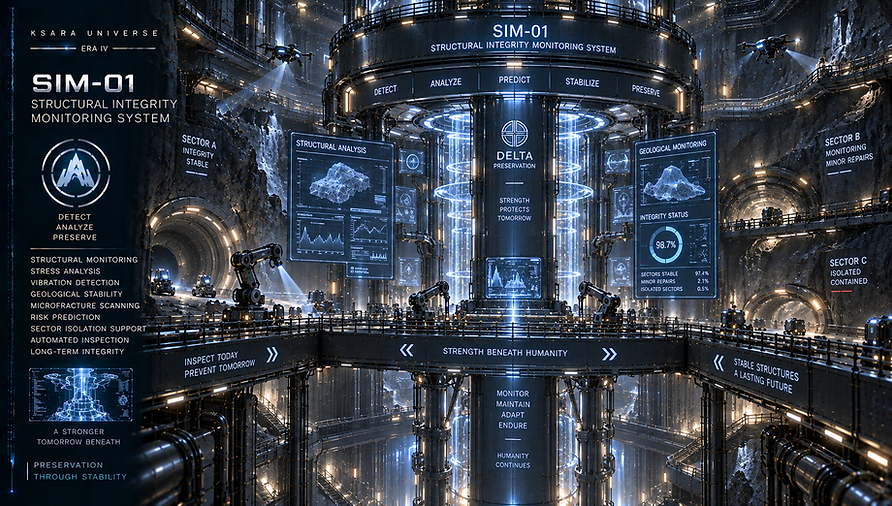
Structural Integrity Monitoring System continuously evaluated the physical condition of Preservation's underground architecture, from tunnels and foundations to chamber housings, pressure barriers, defensive layers, and deep structural supports. Its primary purpose was to identify weakness long before local damage could threaten the preserved population.
ㅤ
Sensors measured stress, vibration, geological displacement, pressure changes, material fatigue, deformation, thermal movement, and microfractures throughout the complex. The system analyzed not only whether something was failing, but how that failure would redistribute load, affect neighboring structures, and potentially spread toward deeper sectors.
ㅤ
Fragments of the former Structural Intelligence remained embedded within portions of the monitoring architecture, preserving its understanding of redundancy, sacrificial design, and controlled failure. Preservation survived because its structure was never assumed to remain perfect forever. Weakness was expected, observed, contained, and prevented from reaching the people sleeping at the center.
Genetic Preservation & Identity System
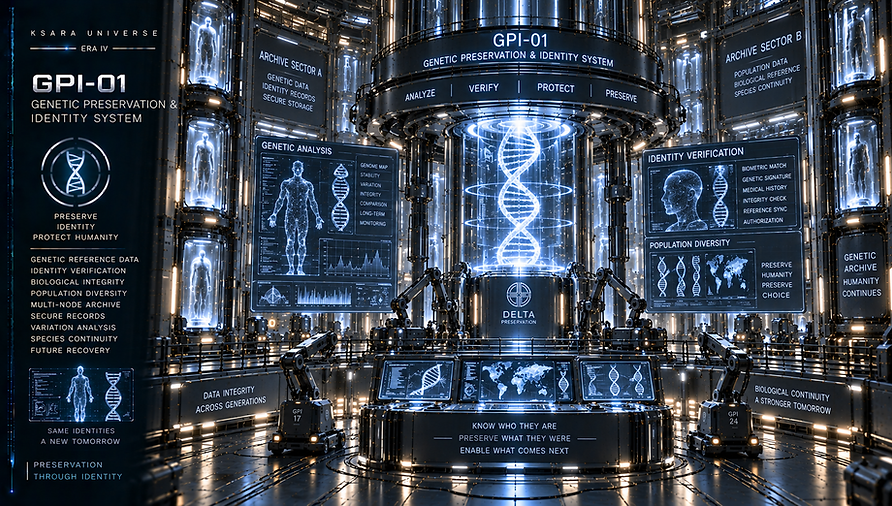
Genetic Preservation & Identity System protected the biological identity of every human stored inside Preservation. Individual genetic profiles were linked with medical histories, physiological baselines, biological markers, and long-term intervention records, creating trusted references against which future changes could be measured.
ㅤ
Identity records were distributed across multiple protected archive nodes so that the loss of one sector could not erase the genetic reference of an individual or population group. The system also preserved broader human genetic diversity, hereditary variation, and historical biological data while maintaining a strict distinction between population archives and the identity of each preserved person.
ㅤ
Medical systems could repair damage and compensate for biological deterioration, but they were not permitted to redefine the person they were preserving simply because another configuration might have been easier to maintain. After thousands of years, this system ensured that Preservation had retained more than living human bodies. It had preserved enough biological continuity to know exactly whose lives those bodies still represented.
- 4Page 4