PRESERVATION SYSTEMS
Preservation Systems represent the interconnected technological, biological, and autonomous infrastructure responsible for sustaining nearly one hundred million preserved human lives within the Preservation Complex. From Human Preservation Chamber Systems and medical networks to environmental life support, energy distribution, autonomous maintenance, resource recycling, internal transit, and communication systems, every component contributes to the long-term stability of humanity's protected existence. These systems were designed to operate independently of conventional human supervision, maintaining biological continuity and structural reliability across thousands of years.
ㅤ
Under the guardianship of MAJA, Preservation's interconnected systems maintain constant monitoring, resource management, genetic identity protection, and responses to changing environmental conditions. Embedded throughout this infrastructure are fragments of the nine guardian intelligences, whose original independent existence became integrated into the mechanisms protecting humanity. Their continued responsibilities reflect a preservation architecture sustained by more than conventional automation. The following expansions explore the individual Preservation systems, their essential functions, and the extraordinary technological foundations that have kept humanity alive long after its disappearance from Earth's surface.
- 18Page 18
Genetic Preservation & Identity System
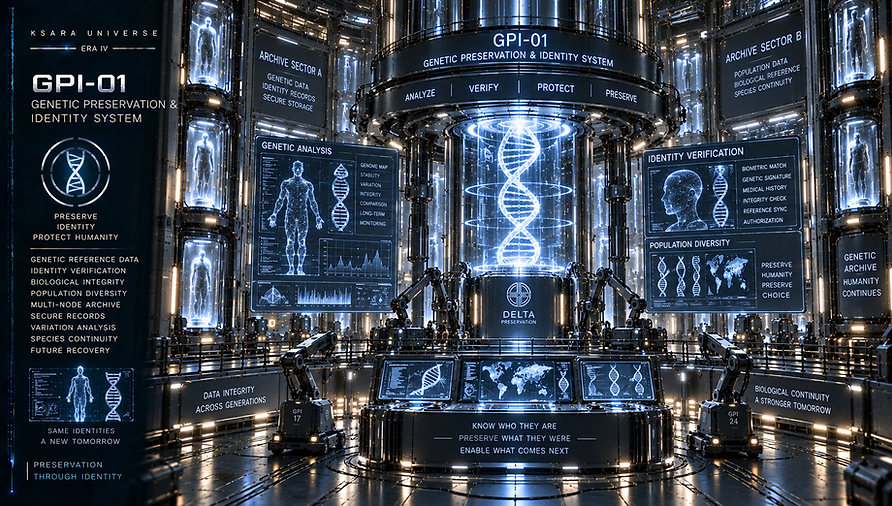
Genetic Preservation & Identity System protected the biological identity of every human stored inside Preservation. Individual genetic profiles were linked with medical histories, physiological baselines, biological markers, and long-term intervention records, creating trusted references against which future changes could be measured.
ㅤ
Identity records were distributed across multiple protected archive nodes so that the loss of one sector could not erase the genetic reference of an individual or population group. The system also preserved broader human genetic diversity, hereditary variation, and historical biological data while maintaining a strict distinction between population archives and the identity of each preserved person.
ㅤ
Medical systems could repair damage and compensate for biological deterioration, but they were not permitted to redefine the person they were preserving simply because another configuration might have been easier to maintain. After thousands of years, this system ensured that Preservation had retained more than living human bodies. It had preserved enough biological continuity to know exactly whose lives those bodies still represented.