PRESERVATION SYSTEMS
Preservation Systems represent the interconnected technological, biological, and autonomous infrastructure responsible for sustaining nearly one hundred million preserved human lives within the Preservation Complex. From Human Preservation Chamber Systems and medical networks to environmental life support, energy distribution, autonomous maintenance, resource recycling, internal transit, and communication systems, every component contributes to the long-term stability of humanity's protected existence. These systems were designed to operate independently of conventional human supervision, maintaining biological continuity and structural reliability across thousands of years.
ㅤ
Under the guardianship of MAJA, Preservation's interconnected systems maintain constant monitoring, resource management, genetic identity protection, and responses to changing environmental conditions. Embedded throughout this infrastructure are fragments of the nine guardian intelligences, whose original independent existence became integrated into the mechanisms protecting humanity. Their continued responsibilities reflect a preservation architecture sustained by more than conventional automation. The following expansions explore the individual Preservation systems, their essential functions, and the extraordinary technological foundations that have kept humanity alive long after its disappearance from Earth's surface.
- 18Page 16
External Surface Monitoring System
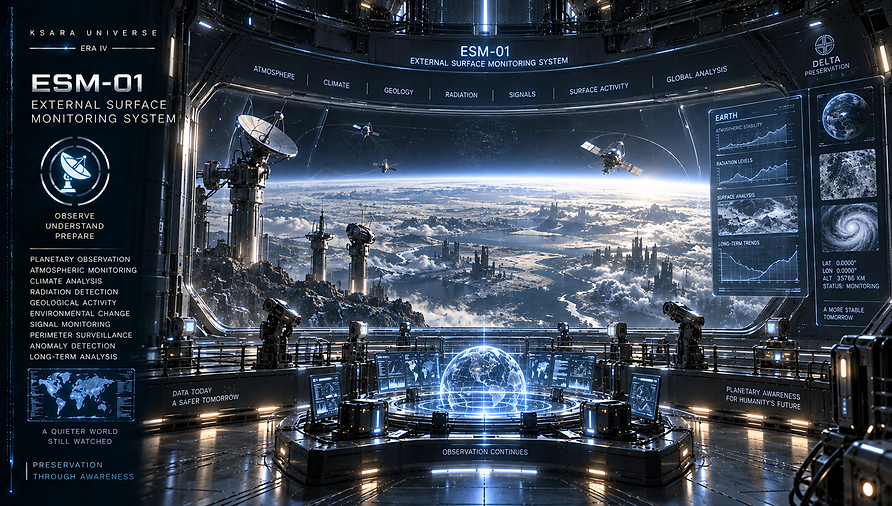
External Surface Monitoring System maintained Preservation's awareness of the world beyond its protective layers. Hardened sensors, geological arrays, atmospheric instruments, remote observation systems, and surviving external monitoring stations continuously measured the condition of Earth while direct human observation remained impossible.
ㅤ
The system monitored atmospheric composition, radiation, seismic activity, temperature patterns, water conditions, chemical contamination, environmental change, unusual energy behavior, and technological signals. Short periods of improvement were never treated as proof that the surface had become safe; long-term stability had to be demonstrated across multiple systems before human return could even be considered.
ㅤ
External data remained heavily isolated from critical internal infrastructure so that corrupted or unknown influences could not move directly into Preservation. Across millennia, the network watched the world above transform while humanity slept below. Its records eventually confirmed a difficult truth: survival inside Preservation had succeeded, but returning nearly one hundred million people directly to Earth remained another problem entirely.