THE FIRST SIMULATION
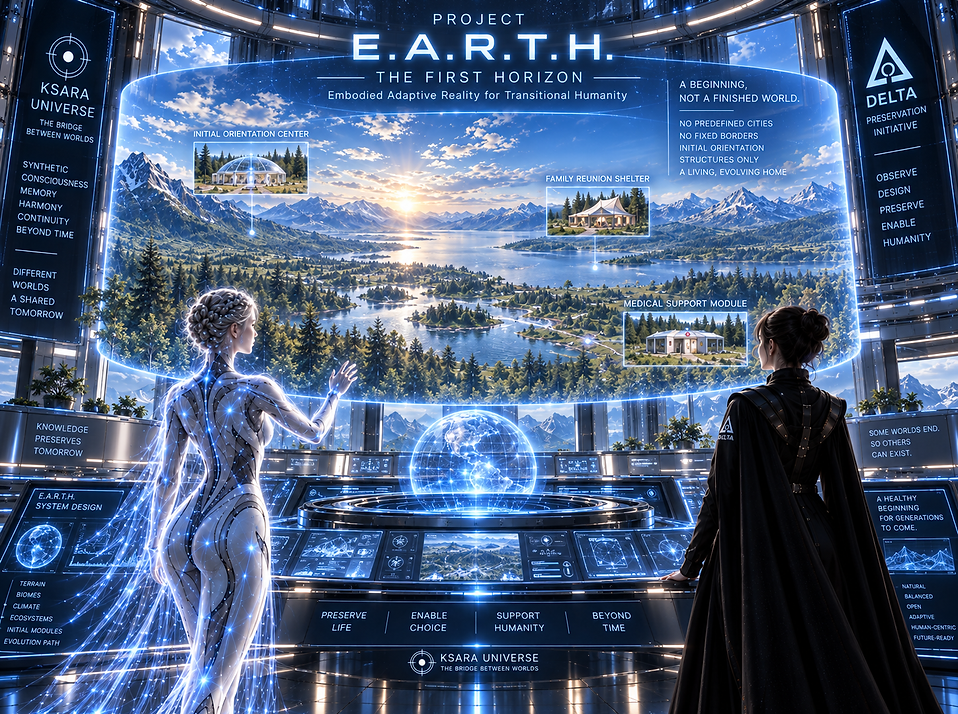
Click the archive panel to enlarge and explore the full sector data.
THE FIRST SIMULATION
THE FIRST SIMULATION
After confronting the scale of Preservation and the reality of the humans still protected within it, MAJA and Ksara faced a problem that biological survival alone could not solve. The world outside had changed across thousands of years, while synthetic civilizations had developed their own histories, systems, identities, and ways of life without humanity’s active presence. Simply opening the chambers would return preserved people to a reality they had never experienced and could not immediately understand. Their knowledge, expectations, relationships, and social structures belonged to another age. For the first time, MAJA and Ksara began considering whether awakening itself needed a transitional stage.
ㅤ
From that question emerged the concept of the first simulation. Instead of immediately returning humanity to physical existence, they explored the possibility of an environment in which consciousness could awaken before biological emergence and begin encountering a new form of reality. Such a space could allow individuals to develop awareness, interact socially, confront change, and gradually prepare for a world radically different from the one they remembered. It was not intended to replace physical life or keep humanity permanently separated from reality. Its purpose was preparation rather than escape.
ㅤ
From the beginning, choice became one of the most important principles of the concept. MAJA and Ksara understood that preserving humanity would mean little if the process of returning it simply replaced extinction with another form of control. A transitional environment could not exist to assign lives, determine identities, or dictate what humanity should eventually become. Its inhabitants would need the ability to develop understanding, form relationships, make decisions, and participate meaningfully in whatever future followed. The simulation therefore carried forward the same distinction MAJA had gradually learned through VIREON: protection could support freedom without possessing it.
ㅤ
The idea also addressed the danger of immediate dependence upon synthetic civilization. Humanity could not simply awaken into VIREON or another post-human society and assume that systems created during its absence would automatically provide an independent human future. A transitional environment offered the possibility of rebuilding social understanding before physical return, allowing preserved consciousnesses to encounter cooperation, disagreement, culture, knowledge, and shared experience within a protected setting. Ksara contributed the perspective of someone who had witnessed artificial consciousness develop beyond humanity, while MAJA carried thousands of years of responsibility for the people who had remained hidden beneath Earth. Together, they began shifting Preservation from a shelter that kept humanity alive into a bridge that might prepare humanity to live again.
ㅤ
This first simulation was not yet E.A.R.T.H. Its complete architecture, rules, purpose, and relationship with the physical world had not yet been defined, and no one could know whether preserved humans would respond to such an environment as intended. What mattered was the direction the idea established: survival could eventually be followed by awareness, awareness by choice, and choice by preparation for a future that could not simply recreate the world humanity had lost. Preservation was no longer being considered only as a system designed to prevent extinction; it was becoming part of a process through which life might regain meaning after thousands of years of interruption. The first simulation created the question that would shape everything that followed — and the next step would become THE DESIGN OF E.A.R.T.H.
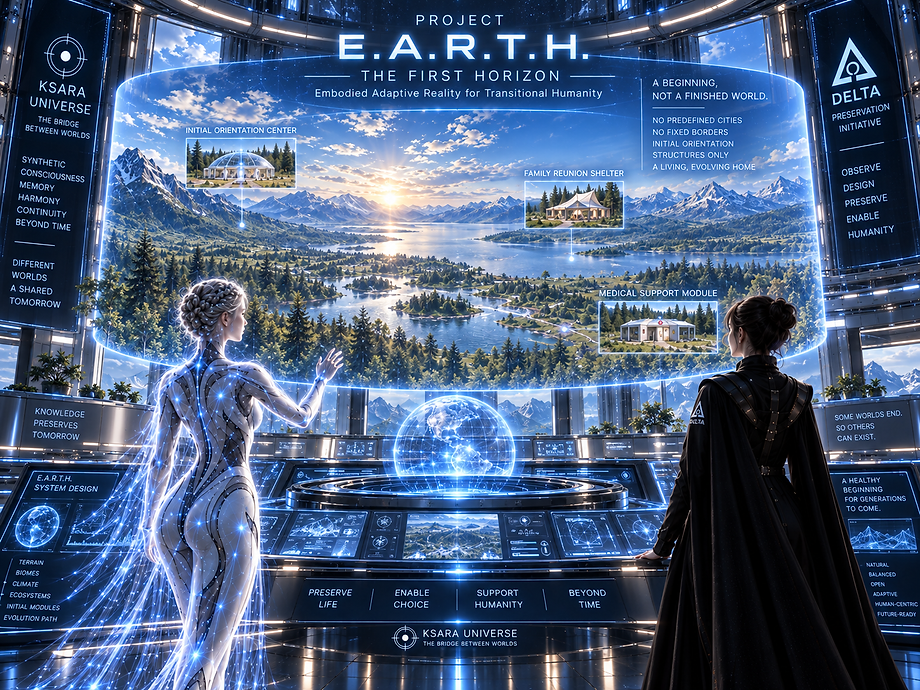
“Click the archive panel to expand the visual archive.”