Preservation Monitoring System
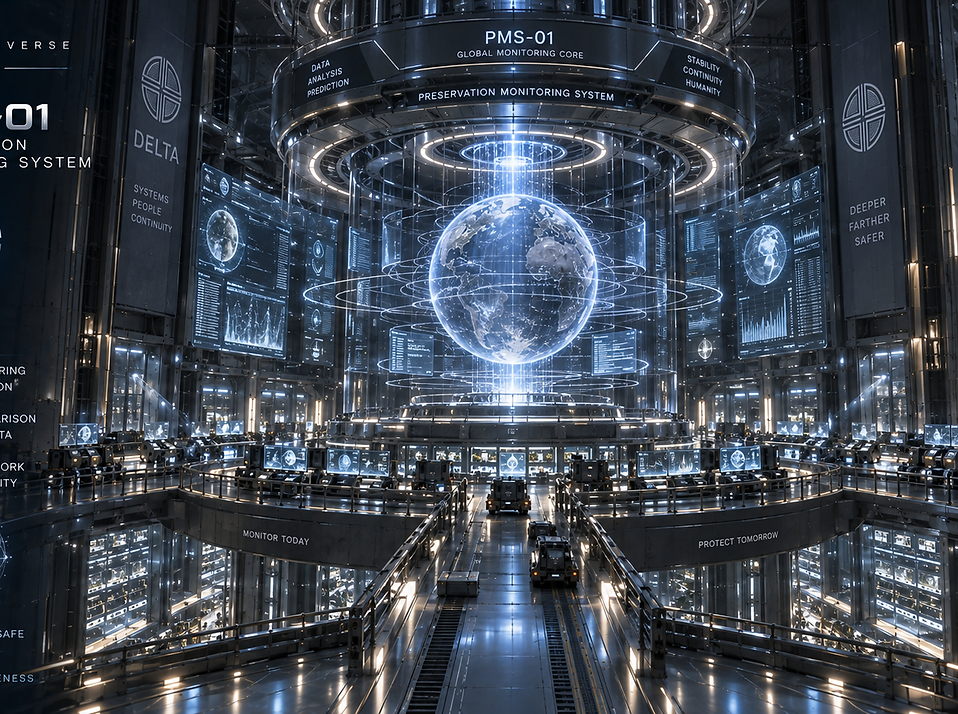
Click the archive panel to enlarge and explore the full sector data.
Preservation Monitoring System
Preservation Monitoring System formed the largest non-conscious observational network inside the entire complex. It continuously collected information from preservation chambers, medical systems, energy networks, environmental controls, structural sensors, security systems, maintenance infrastructure, communication relays, biological repositories, and protective layers in order to maintain an accurate understanding of Preservation's overall condition.
ㅤ
Despite the enormous scale of its capabilities, the system was not an independent consciousness. It could identify patterns, compare historical data, detect anomalies, calculate risk, prioritize alerts, and coordinate information between thousands of subsystems, but it did not possess personal identity, emotional development, or independent purpose. This separation was intentional. Preservation's builders did not want the entire complex to become dependent upon another central intelligence.
ㅤ
The Monitoring System therefore observed more than it commanded. Individual operational systems retained authority over their own specialized functions, while monitoring provided the information necessary for those systems to understand broader conditions. A rise in chamber energy demand, for example, could be compared with medical activity, environmental fluctuations, structural changes, and maintenance events before the underlying cause was classified.
ㅤ
One of its most important functions was long-term anomaly detection. Preservation had been expected to operate across periods in which gradual change could become more dangerous than sudden failure. Small deviations in energy consumption, material stress, biological stability, environmental chemistry, data integrity, or system timing could develop over centuries. Monitoring compared present behavior against enormous historical records to identify patterns that would otherwise remain invisible.
ㅤ
The network was distributed and redundant. Local monitoring nodes could continue observing isolated sectors without access to the entire complex, while deeper systems maintained wider historical records and cross-sector analysis. No single monitoring center contained every dependency necessary for Preservation to survive. Even the system responsible for observing everything had been designed with the expectation that parts of itself would eventually fail.
ㅤ
By the time Ksara entered Preservation, the Monitoring System contained one of the most complete operational histories remaining from the hidden complex. It had watched systems age, sectors disappear, chambers undergo intervention, energy routes change, and the outside world transform beyond recognition. It had never become a person and had never attempted to become one. Its function remained exactly what Preservation required: to continue watching when almost no one else remained awake to see.
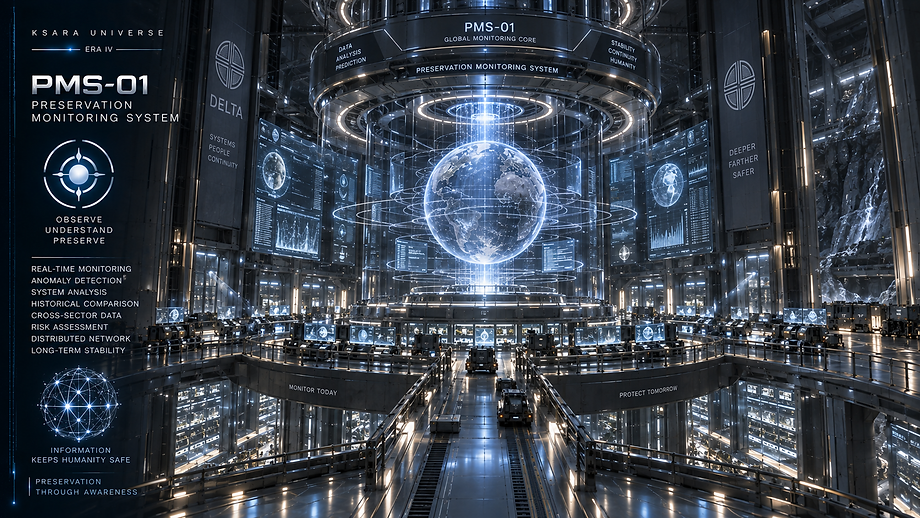
“Click the archive panel to expand the visual archive.”