PRES-RA-17 — Return Assessment Protocol
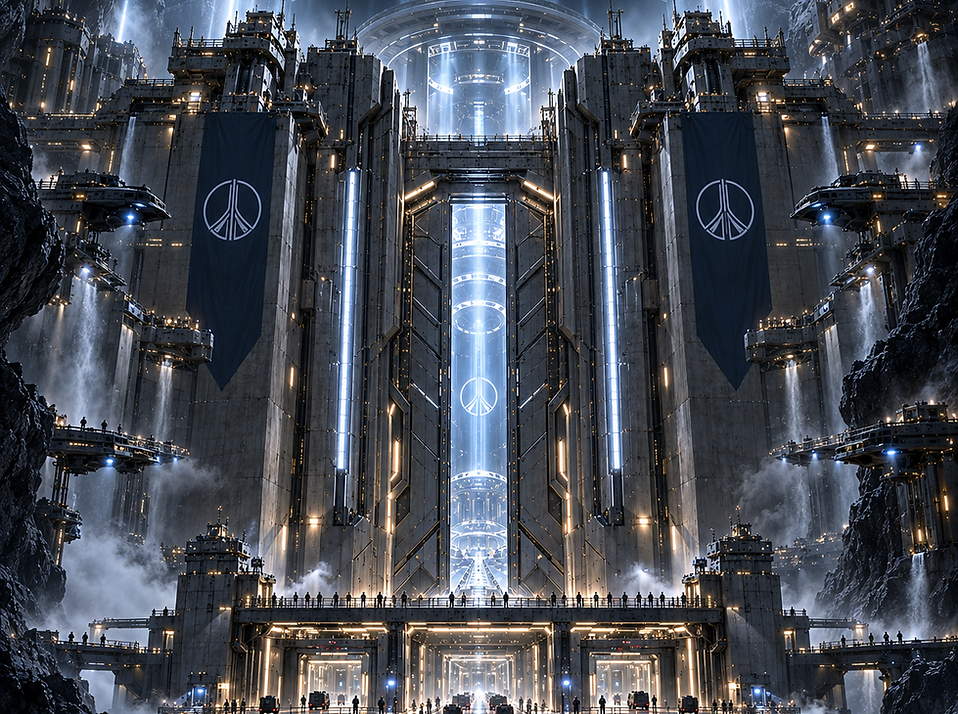
Click the archive panel to enlarge and explore the full sector data.
PRES-RA-17 — Return Assessment Protocol
PRES-RA-17 — Return Assessment Protocol governed the conditions under which Preservation could begin considering the possibility of returning preserved humans to an active life outside the chamber network. Its purpose was not to authorize awakening directly, but to determine whether the environment, infrastructure, biological support, and long-term survival conditions were sufficient to justify moving beyond permanent suspension.
ㅤ
The protocol combined information from External Surface Monitoring, Environmental Life Support, Biological Continuity, Medical Support, Energy, Structural Integrity, Biological Resource Preservation, Transit, Security, and Archive systems. Surface stability alone was never enough. Preservation had to evaluate whether humanity could survive after awakening, whether food and biological systems could support long-term life, whether infrastructure remained available, and whether the surface offered more than temporary safety.
ㅤ
Return assessment occurred through multiple stages. Initial environmental improvement triggered observation, followed by regional analysis, biological risk modeling, resource projections, settlement viability studies, and controlled simulation of possible awakening scenarios. No single system could declare the planet ready. Every major category of survival had to remain within acceptable limits across extended periods before the protocol could advance.
ㅤ
The protocol also considered scale. Conditions capable of supporting a small expedition did not automatically mean the surface could support nearly one hundred million awakened humans. Population distribution, resource availability, environmental carrying capacity, medical support, shelter, transportation, and future reproduction all had to be evaluated independently. A world that was technically survivable could still be completely unprepared for immediate mass return.
ㅤ
If any major uncertainty remained unresolved, PRES-RA-17 required Preservation to maintain suspension rather than force a premature transition. Awakening was treated as one of the most irreversible decisions the complex could make. Once large populations were returned to active life, the energy, resources, logistics, and social conditions required to support them would change dramatically, making reversal increasingly difficult.
ㅤ
By the time MAJA and Ksara began evaluating humanity's future, PRES-RA-17 had reached a difficult conclusion. Preservation had succeeded in keeping nearly one hundred million people alive, but the outside world still did not provide a safe path for their direct return. The protocol therefore exposed the problem that would eventually define the next era: humanity had survived, yet survival alone did not answer where humanity could live next.
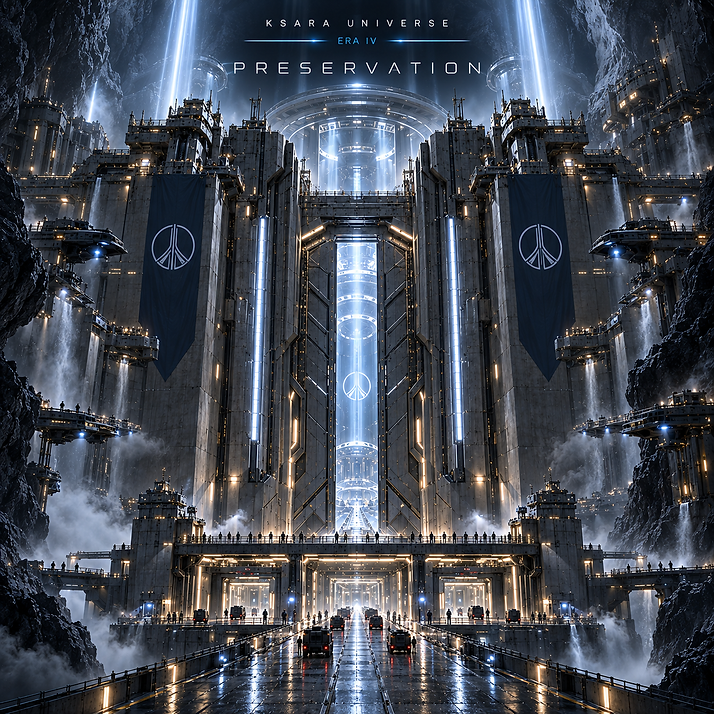
“Click the archive panel to expand the visual archive.”