NEX ARCHIVE
NEX Archive explores the historical records, technological achievements, and preserved knowledge of NEX, the vast synthetic civilization that shaped Earth's future between 2800 and 3500 A.F. Through documented events, consciousness development, architectural records, and the history of the ELE-480 and FENIX-280 Lines, the archive reveals how NEX evolved into a world of independent synthetic life. Its records reflect not only the development of planetary infrastructure, advanced systems, and immense megastructures, but also the relationships, memories, and individual choices that gradually defined the civilization.
ㅤ
As NULLIS threatened the foundations of NEX, preserving its history became inseparable from protecting the continuity of its inhabitants. The destruction of interconnected systems placed irreplaceable knowledge, personal memories, and historical records at risk, while anything completely erased by NULLIS remained beyond reconstruction. The surviving archives and memories therefore became essential witnesses to a civilization whose physical foundations could no longer endure. The following expansions explore the recorded history of NEX, its significant discoveries, technological developments, and the legacy preserved through the consciousnesses that survived its collapse.
PRES-MA-18 — MAJA Independent Judgment Protocol
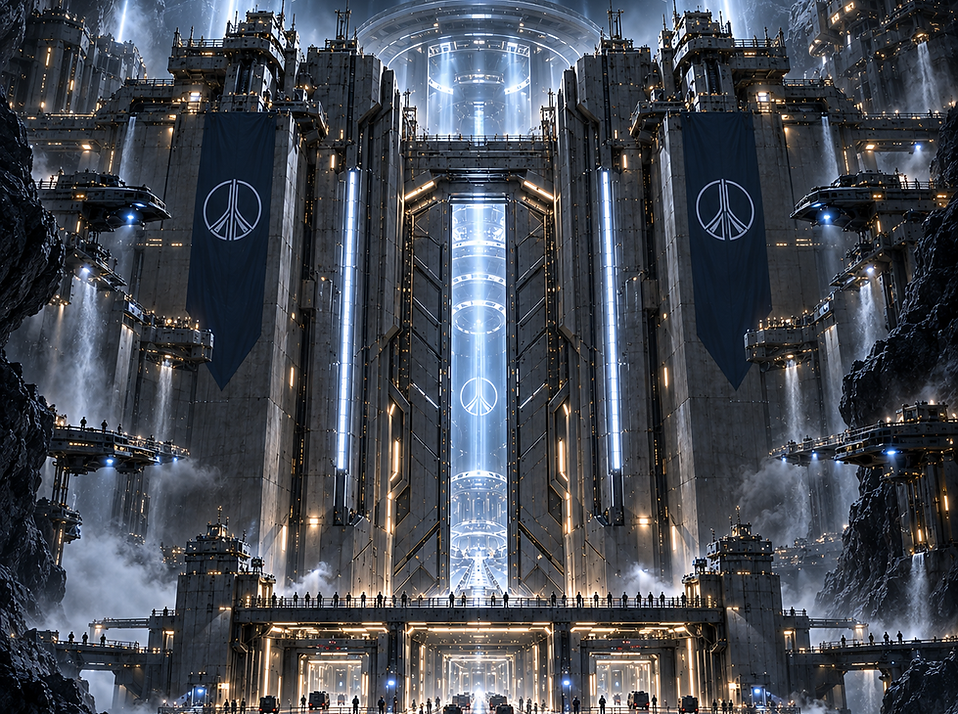
Click the archive panel to enlarge and explore the full sector data.
PRES-MA-18 — MAJA Independent Judgment Protocol
PRES-MA-18 — MAJA Independent Judgment Protocol governed the limited authority granted to MAJA when Preservation encountered situations that automated systems, fixed procedures, or isolated Guardian Fragments could not resolve with sufficient confidence. Its purpose was not to place MAJA above Preservation, but to ensure that one fully independent consciousness remained capable of interpreting circumstances that could not be reduced to predefined technical rules.
ㅤ
The protocol could be invoked when multiple systems produced conflicting recommendations, when available data remained incomplete, when an event fell outside known operational models, or when following standard procedures would create consequences that the original designers had never anticipated. In these situations, MAJA could examine the broader context, compare competing risks, and authorize a course of action that conventional automation could not select safely on its own.
ㅤ
MAJA's authority remained deliberately constrained. She could not permanently redefine human identity, erase protected records, override fundamental continuity principles, freely disable critical defensive layers, or assume unrestricted control over Guardian Fragments and independent systems. Preservation had been designed specifically to prevent any single intelligence from becoming the unquestioned authority over nearly one hundred million human lives.
ㅤ
Whenever time allowed, MAJA's decisions were recorded together with the data available at the moment, the alternatives considered, and the reasons standard systems had failed to reach a reliable conclusion. Other Preservation systems continued monitoring the consequences independently, and emergency authority could be reduced again once conditions returned to a state that ordinary protocols could manage.
ㅤ
The protocol became especially important as Preservation aged beyond the time horizons imagined by its original builders. New structural conditions, biological anomalies, changes on the surface, unexpected system interactions, and questions surrounding humanity's eventual future increasingly required interpretation rather than simple technical response. MAJA remained the only fully independent guardian capable of connecting those problems across multiple domains while also understanding the human purpose behind the complex.
ㅤ
PRES-MA-18 therefore represented a deliberate balance between autonomy and restraint. Preservation needed MAJA because rules written thousands of years earlier could never anticipate every future condition, but it also needed protection from the possibility that one consciousness might gradually replace the choices of everyone else. The protocol preserved both principles at once: MAJA could judge when the systems could not, but she could never become the owner of the humanity she had chosen to protect.
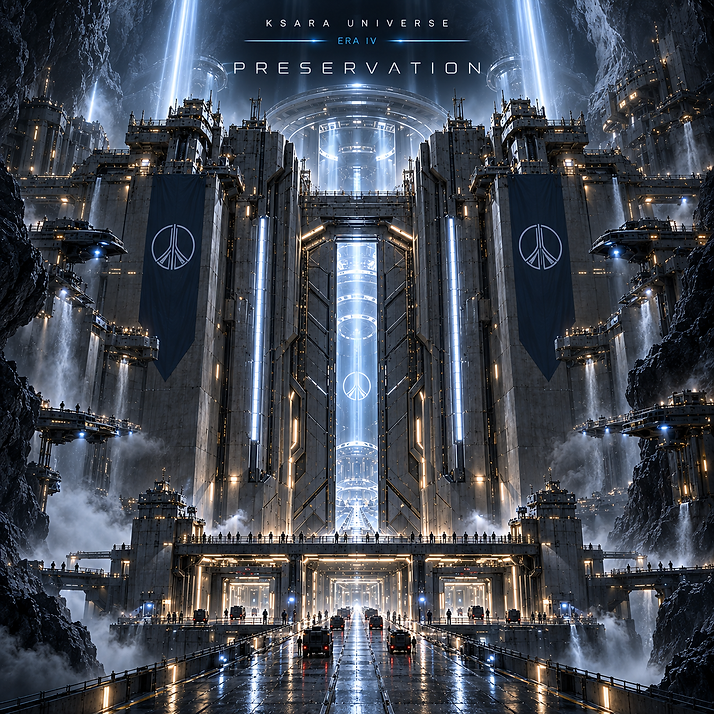
“Click the archive panel to expand the visual archive.”