PRES-CP-01 — Human Continuity Protocol
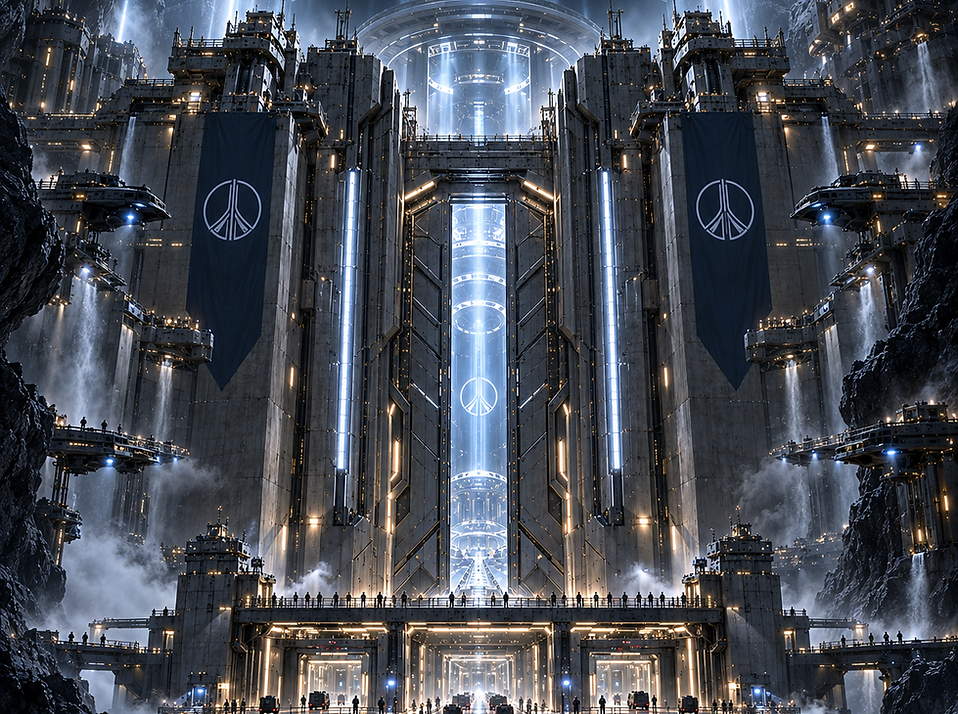
Click the archive panel to enlarge and explore the full sector data.
PRES-CP-01 — Human Continuity Protocol
PRES-CP-01 — Human Continuity Protocol represented the highest foundational principle governing Preservation and every system connected to the nearly one hundred million humans stored within it. Its purpose was not simply to keep biological bodies alive, but to preserve the uninterrupted possibility that each individual could one day return to conscious human life. Every chamber, medical intervention, energy decision, maintenance action, security response, and structural priority was therefore evaluated according to its effect on long-term human continuity.
ㅤ
The protocol established preserved humans as the primary protected population of the entire complex. Critical systems such as the Human Preservation Chamber System, Biological Continuity System, Preservation Medical Support System, Genetic Preservation & Identity System, Environmental Life Support System, and Preservation Energy Network were required to treat human survival as their highest operational priority. When resources became limited, nonessential infrastructure could be reduced, isolated, or permanently abandoned before systems directly responsible for preserved lives were allowed to fail.
ㅤ
Human Continuity did not mean maintaining biological function at any cost. The protocol required Preservation to protect the physical integrity, genetic identity, medical history, and recoverability of each person rather than reducing humanity to anonymous biological material. Interventions therefore had to preserve the distinction between repairing damage and fundamentally altering the individual. Any irreversible procedure required additional verification whenever time and system conditions allowed it.
ㅤ
The protocol also prevented a local emergency from automatically becoming a threat to the entire preserved population. Chamber clusters, medical networks, biological archives, energy systems, and environmental infrastructure could isolate themselves and continue operating independently if surrounding sectors became unstable. If preserving one region placed substantially larger populations at risk, Preservation was permitted to sacrifice infrastructure, access routes, or even entire damaged sectors in order to protect deeper continuity.
ㅤ
No single artificial intelligence, operational system, or Guardian Fragment possessed authority to redefine what human continuity meant on its own. MAJA could interpret circumstances that automated systems could not resolve, but even her decisions remained constrained by the fundamental requirement that preserved humans retained their identity and future right to exist as independent people. Preservation had been built to protect humanity, not to transform humanity into something easier for the system to maintain.
ㅤ
Across thousands of years, PRES-CP-01 remained the principle against which every major Preservation decision was measured. Systems could fail, sectors could disappear, resources could decline, and the world beyond the protective layers could change beyond recognition, but the central objective remained unchanged. As long as Preservation still contained living humans whose return remained possible, the system had not yet completed its purpose.
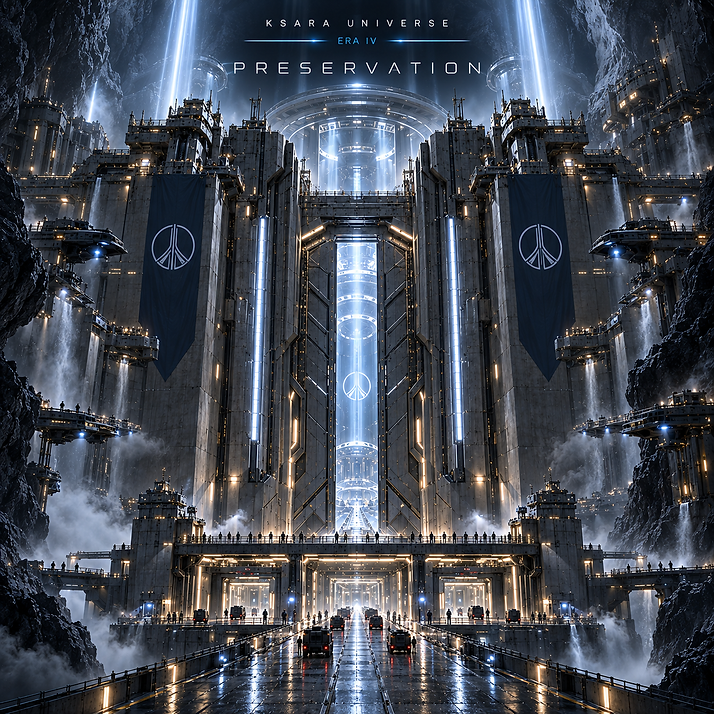
“Click the archive panel to expand the visual archive.”