PRES-CH-02 — Chamber Emergency Stabilization Protocol
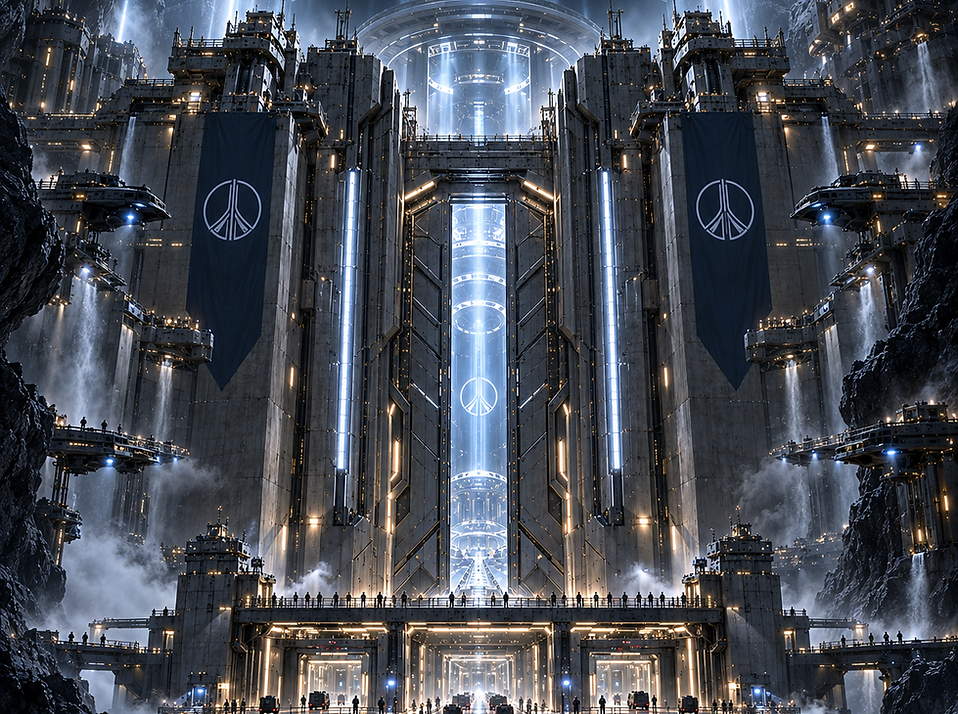
Click the archive panel to enlarge and explore the full sector data.
PRES-CH-02 — Chamber Emergency Stabilization Protocol
PRES-CH-02 — Chamber Emergency Stabilization Protocol was activated whenever one or more human preservation chambers showed signs of critical instability that could no longer be corrected through routine automated adjustment. Its purpose was to prevent a localized chamber failure from becoming an irreversible loss of human life or spreading into neighboring chamber clusters.
ㅤ
The protocol immediately compared biological data, chamber pressure, thermal stability, energy availability, fluid circulation, neural readings, structural condition, and local environmental status to determine whether the problem originated inside the chamber itself or from a wider system failure. Medical Support, Biological Continuity, Energy, Monitoring, Maintenance, and Environmental systems were brought into a shared emergency state so that intervention could begin without waiting for centralized approval.
ㅤ
If the chamber remained recoverable, the protocol redirected energy, medical capacity, repair units, replacement components, and environmental support toward the affected unit. Metabolic activity could be reduced further, secondary support systems activated, and nonessential chamber functions suspended in order to preserve the minimum biological conditions required for survival while repair or medical intervention continued.
ㅤ
When several chambers within the same cluster became unstable, the protocol expanded automatically. Neighboring units were checked for shared failure patterns, local energy and fluid networks were isolated, and the affected cluster could be disconnected from surrounding systems before the malfunction propagated further. If necessary, nearby chambers were transferred onto independent reserve support while the damaged network remained contained.
ㅤ
The protocol strongly favored recovery over abandonment, but it did not allow unlimited resources to be consumed by a failure that threatened substantially larger populations. If repeated intervention could not stabilize a damaged chamber cluster and continued support placed other sectors at risk, Preservation could isolate the affected region permanently while preserving every recoverable individual still capable of transfer or independent stabilization.
ㅤ
Across thousands of years, PRES-CH-02 became one of the most frequently activated emergency protocols inside Preservation. Individual components failed, chamber systems aged, and unexpected biological complications appeared despite continuous maintenance. The protocol existed so that no single malfunction would immediately become a death sentence. Every chamber failure was treated first as a life that might still be saved.
“Click the archive panel to expand the visual archive.”