PRES-CC-09 — Contamination Containment Protocol

Click the archive panel to enlarge and explore the full sector data.
PRES-CC-09 — Contamination Containment Protocol
PRES-CC-09 — Contamination Containment Protocol was activated whenever Preservation detected biological, chemical, atmospheric, microbial, or unknown contamination capable of spreading beyond its point of origin. Its purpose was to isolate the affected environment before contaminated air, water, materials, equipment, or biological matter could move into neighboring sectors and threaten preserved humans or critical infrastructure.
ㅤ
The protocol immediately identified the suspected contamination source and compared data from environmental sensors, medical systems, biological monitoring, water networks, structural barriers, transit systems, and local maintenance units. Air circulation could be stopped, pressure differentials altered, water pathways closed, transport access suspended, and communication with automated handling systems restricted until the nature and extent of the contamination were better understood.
ㅤ
Affected regions were divided into progressively smaller containment zones whenever possible. Local filtration, sterilization, atmospheric replacement, surface decontamination, waste isolation, and material quarantine procedures were activated while unaffected sectors remained separated behind independent environmental barriers. Biological Resource Preservation repositories and human chamber regions received especially strict protection because contamination reaching either could create damage impossible to reverse.
ㅤ
Nothing leaving a contaminated sector was automatically considered safe. Maintenance units, recovered materials, medical equipment, water, biological samples, and transport systems all required verification before they could re-enter normal circulation. Items that could not be reliably decontaminated were isolated permanently or destroyed if keeping them created greater long-term risk.
ㅤ
If the contamination source could not be identified, PRES-CC-09 treated uncertainty as a continuing threat rather than assuming conditions had returned to normal. The affected sector remained isolated until repeated environmental, biological, and chemical analysis showed stable results across extended observation periods. Reconnection could begin only through the Controlled Reconnection Protocol after containment systems confirmed that no active spread remained.
ㅤ
Across thousands of years, PRES-CC-09 protected Preservation from failures that could otherwise move silently through air, water, biological material, or maintenance infrastructure. Its purpose was not simply to clean contaminated regions after an incident. It existed to ensure that what entered one sector could never be allowed to become a threat to all of Preservation.
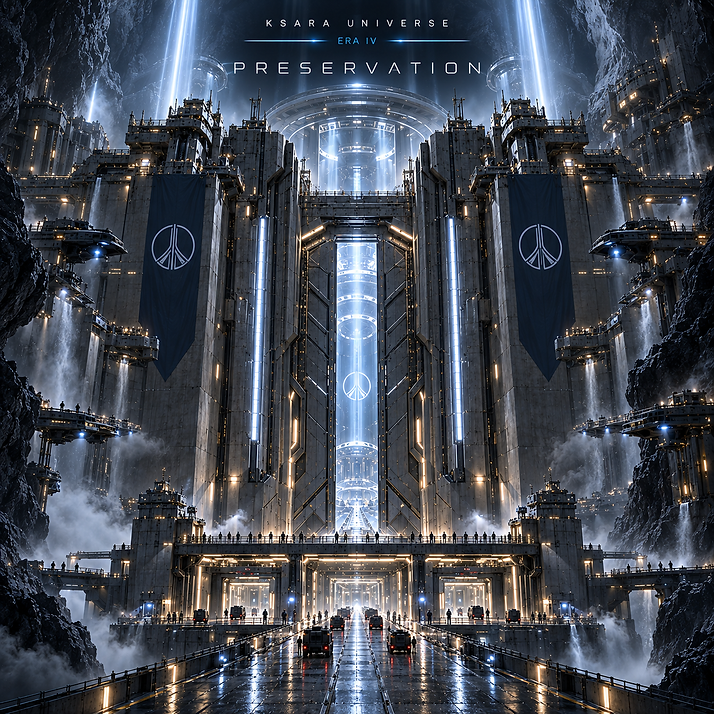
“Click the archive panel to expand the visual archive.”