PRES-AM-14 — Autonomous Maintenance Priority Protocol
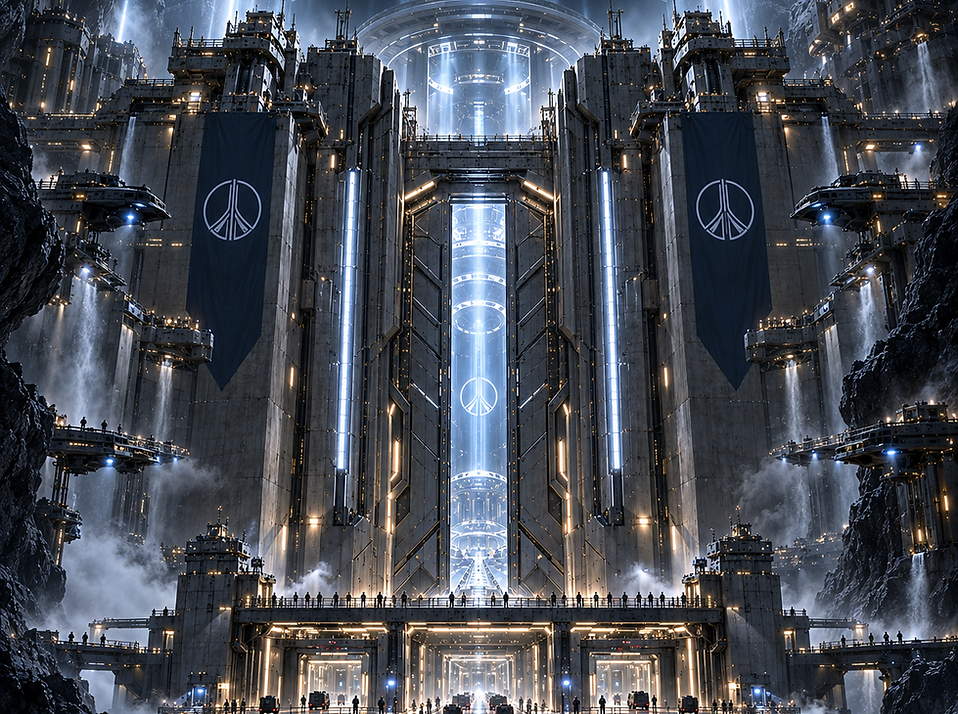
Click the archive panel to enlarge and explore the full sector data.
PRES-AM-14 — Autonomous Maintenance Priority Protocol
PRES-AM-14 — Autonomous Maintenance Priority Protocol governed how Preservation assigned repair capacity when multiple systems required attention at the same time. Its purpose was to prevent maintenance resources from being consumed according to convenience, proximity, or the order in which failures appeared. Every repair decision was instead evaluated according to its potential effect on preserved human life, chamber stability, environmental support, energy continuity, structural protection, and the long-term survival of the complex.
ㅤ
The protocol continuously compared active faults across Preservation and assigned each one a dynamic priority level. A minor mechanical defect near a critical chamber cluster could receive greater urgency than a larger failure inside an abandoned technical sector, while structural instability threatening several systems at once could immediately override routine maintenance across an entire region. Priority therefore depended upon consequence rather than the physical size of the malfunction.
ㅤ
Maintenance units, repair drones, fabrication capacity, replacement parts, energy reserves, and transport access were redistributed according to these calculations. If several failures competed for the same limited resources, the protocol selected the sequence most likely to preserve overall continuity. Repairs capable of preventing secondary failures were usually prioritized before those that restored convenience or redundant infrastructure.
ㅤ
The protocol also considered whether repairing a system remained economically and structurally rational. Preservation was not required to restore every aging component indefinitely. If repeated intervention consumed more material and energy than the system justified, maintenance could shift toward containment, replacement, rerouting, or permanent abandonment. The objective was to preserve function, not necessarily every original machine that had once provided it.
ㅤ
Critical repair decisions were continuously reassessed as conditions changed. A low-priority fault could become urgent if neighboring systems failed, while an emergency repair could lose priority if Sector Isolation successfully removed the threat. This prevented Preservation from remaining committed to an outdated maintenance plan while the wider situation evolved around it.
ㅤ
Across thousands of years, PRES-AM-14 allowed a finite repair network to support an infrastructure that could never remain physically unchanged forever. Machines wore out, materials degraded, routes disappeared, and resources became increasingly valuable. The protocol ensured that Preservation always directed its remaining capacity toward the systems whose survival mattered most: repair what protects continuity first, and never spend the future preserving what the future no longer needs.
“Click the archive panel to expand the visual archive.”