Environmental Life Support System
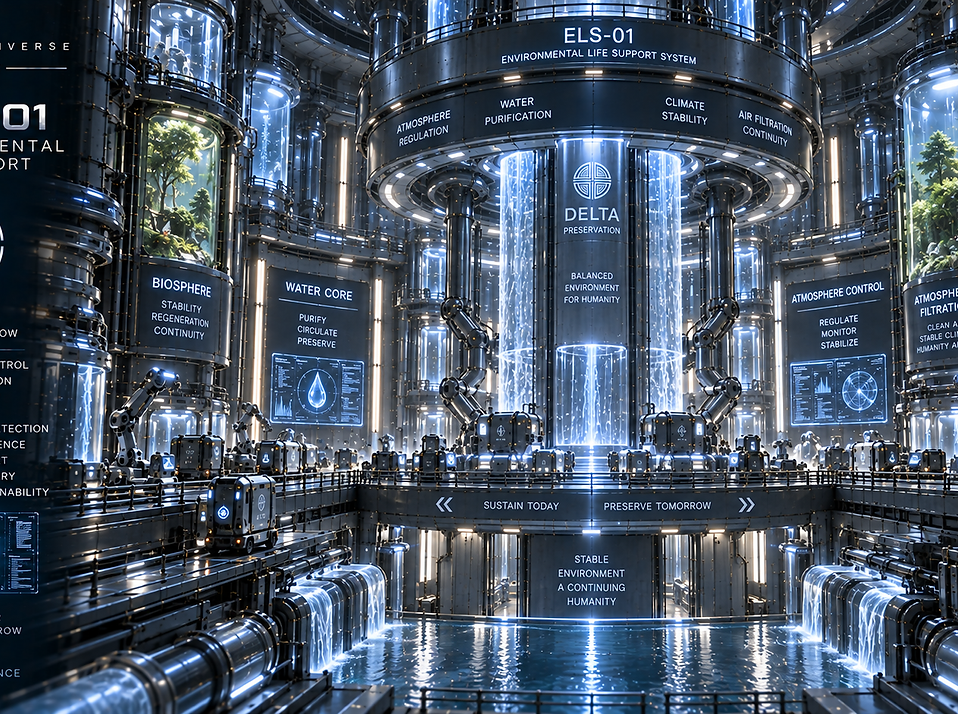
Click the archive panel to enlarge and explore the full sector data.
Environmental Life Support System
Environmental Life Support System maintained the artificial conditions required for Preservation to remain habitable and biologically stable across thousands of years. The system controlled atmosphere, temperature, humidity, pressure, water quality, air filtration, contamination levels, and the internal environmental balance of every inhabited or biologically active sector. Because the outside world could no longer be treated as a reliable source of breathable air, clean water, or stable climate, Preservation had to function as a largely closed environment capable of sustaining itself independently from the surface.
ㅤ
The system continuously monitored atmospheric composition throughout the complex, adjusting oxygen levels, carbon dioxide removal, humidity, temperature, and pressure according to the function of each sector. Preservation chambers, medical areas, biological archives, maintenance zones, transit corridors, and technical sectors all required different environmental conditions. Local control systems therefore maintained their own parameters while remaining connected to wider monitoring networks that could detect long-term drift or abnormal changes.
ㅤ
Water formed one of the most critical parts of the system. Purification, storage, circulation, sterilization, condensation recovery, and waste-water processing operated as interconnected closed cycles designed to minimize permanent loss. Multiple reserves were distributed throughout Preservation so that contamination or infrastructure damage within one region would not compromise the entire complex. Water used by environmental systems, medical infrastructure, biological resources, and maintenance operations could be recovered and returned to controlled circulation whenever possible.
ㅤ
Environmental Life Support was also designed around strict sector independence. Each major region contained enough local regulation capacity to remain stable even if communication or supply connections with neighboring sectors were interrupted. Pressure doors, atmospheric isolation barriers, independent filtration units, and emergency reserves allowed damaged areas to be sealed before contamination could spread deeper into Preservation. The system could deliberately sacrifice environmental stability within an abandoned sector if doing so protected the regions beyond it.
ㅤ
Fragments originating from the former Environmental Intelligence remained embedded within parts of the life-support architecture. These fragments allowed local systems to interpret unusual atmospheric behavior, chemical contamination, biological changes, and environmental conditions that could not have been predicted when Preservation was first constructed. They did not represent a surviving independent consciousness, but they retained enough adaptive reasoning to modify local environmental responses when fixed operational procedures were no longer sufficient.
ㅤ
For most of Preservation's existence, the Environmental Life Support System operated almost invisibly. Air continued circulating through corridors no human had walked for centuries, water continued passing through purification systems, pressure remained stable behind sealed barriers, and protected biological environments remained within carefully maintained limits. Its success was measured by the absence of change: after thousands of years beneath a damaged world, Preservation still contained an environment in which humanity could theoretically live again.
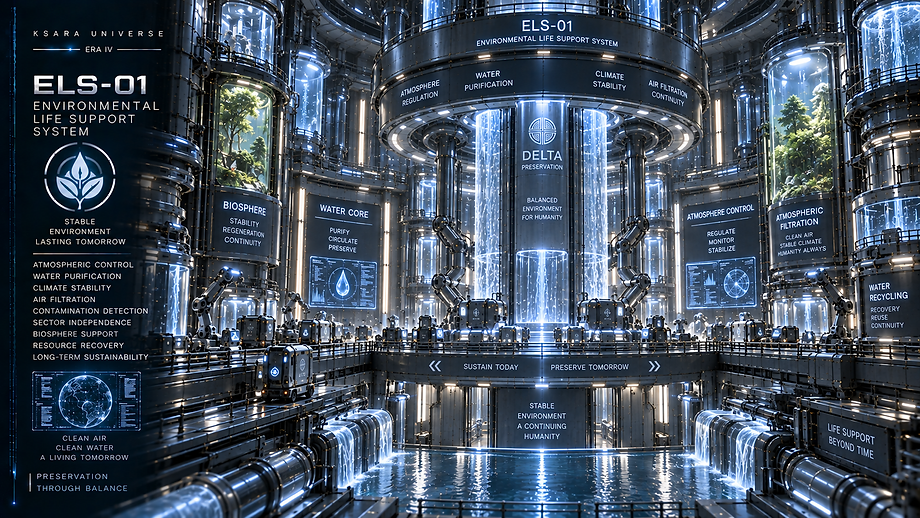
“Click the archive panel to expand the visual archive.”