Biological Resource Preservation System
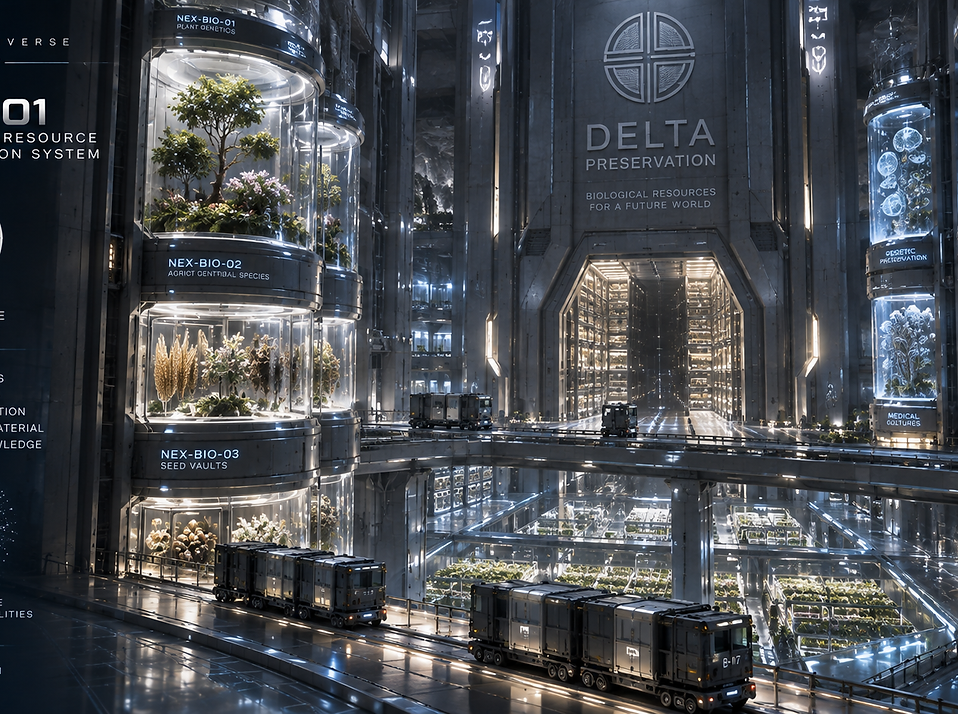
Click the archive panel to enlarge and explore the full sector data.
Biological Resource Preservation System
Biological Resource Preservation System was responsible for protecting the biological foundations required for humanity to rebuild life beyond the preservation chambers themselves. While nearly one hundred million humans remained in long-term suspension, the future of humanity also depended upon preserving the plants, microorganisms, genetic resources, reproductive materials, and biological knowledge needed to support a functioning world after awakening.
ㅤ
The system maintained extensive collections of seeds, plant genetics, microbial cultures, tissue samples, reproductive material, agricultural species, medically important organisms, and other biological resources considered essential to human survival. These collections were not stored as one centralized archive. Multiple protected repositories contained overlapping resources so that contamination, structural loss, or system failure within one sector could not destroy entire biological lineages.
ㅤ
Different materials required radically different preservation conditions. Seeds, living cultures, frozen tissue, genetic samples, and active biological systems each depended upon specialized temperature, humidity, atmospheric, chemical, and containment controls. The system therefore operated closely with Environmental Life Support, Genetic Preservation, Medical Support, Energy, and Monitoring systems to ensure that each biological resource remained within its own long-term stability requirements.
ㅤ
The system also maintained detailed information explaining how preserved biological resources could eventually be restored to active use. Agricultural growth cycles, ecological relationships, nutritional requirements, soil dependencies, microbial interactions, cultivation techniques, disease risks, and genetic variation were stored alongside the materials themselves. Preserving a seed without preserving the knowledge required to grow it would have offered little value to a civilization attempting to begin again.
ㅤ
Strict isolation procedures protected biological repositories from cross-contamination. Individual collections could be sealed independently, and suspected biological anomalies were prevented from spreading between storage regions. Samples were periodically compared against reference data to detect genetic drift, degradation, contamination, or loss of viability long before those changes became irreversible.
ㅤ
For most of Preservation's existence, these resources remained unused. Their purpose was not to support the sleeping population directly, but to preserve possibilities that might become essential after awakening. Humanity had entered Preservation with more than bodies and memories. Hidden throughout its deepest biological archives remained the foundations of agriculture, medicine, ecology, and the living systems from which a future human world might one day grow again.
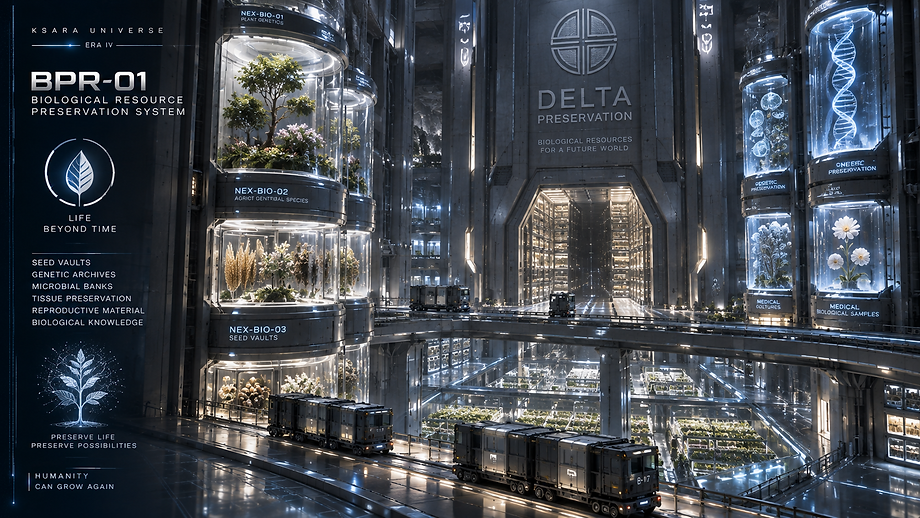
“Click the archive panel to expand the visual archive.”