Biological Continuity System

Click the archive panel to enlarge and explore the full sector data.
Biological Continuity System
Biological Continuity System was responsible for maintaining the long-term physical viability of every preserved human body beyond the basic functions of suspension. While the chamber network controlled the immediate conditions required to keep a person alive, the Biological Continuity System monitored how each body changed over time and continuously compared those changes against the individual's original biological state.
ㅤ
The system tracked cellular stability, tissue integrity, metabolic drift, organ condition, immune response, vascular health, neural preservation, and the gradual effects of extreme long-term suspension. Small deviations that would have been insignificant over days or months could become critical across centuries, so the system was designed to detect trends long before they reached dangerous levels. Its purpose was not simply to react to visible medical failure, but to prevent biological deterioration from accumulating unnoticed.
ㅤ
Every preserved individual maintained an independent continuity profile. This profile contained baseline physiological data, long-term biological history, intervention records, genetic references, and changes observed throughout suspension. The system used this information to distinguish between harmless variation and genuine degradation, allowing treatment to remain specific to the person rather than forcing every body toward one standardized biological model.
ㅤ
Biological Continuity operated closely with the Preservation Medical Support System but remained separate from it. Continuity identified long-term instability, while medical systems performed the interventions required to correct it. This separation reduced the risk that one system could both interpret and execute every decision affecting a human body without independent verification. In critical situations, multiple systems compared results before any irreversible biological intervention was permitted.
ㅤ
The network was distributed across chamber clusters and protected biological nodes so that continuity records could survive the loss of individual sectors. Local systems maintained enough information to protect nearby populations independently, while deeper archives preserved longer-term reference data and recovery histories. If communication between sectors disappeared, biological monitoring continued locally until synchronization could safely resume.
ㅤ
Across thousands of years, the Biological Continuity System became one of the quietest but most important technologies inside Preservation. It prevented gradual cellular damage, compensated for long-term physiological drift, and ensured that the humans sleeping beneath Earth remained more than technically alive. When MAJA finally brought Ksara into the Central Preservation Sector, those bodies had not simply survived. Their biological continuity had been actively protected across an interval no human medical system had originally been designed to endure.
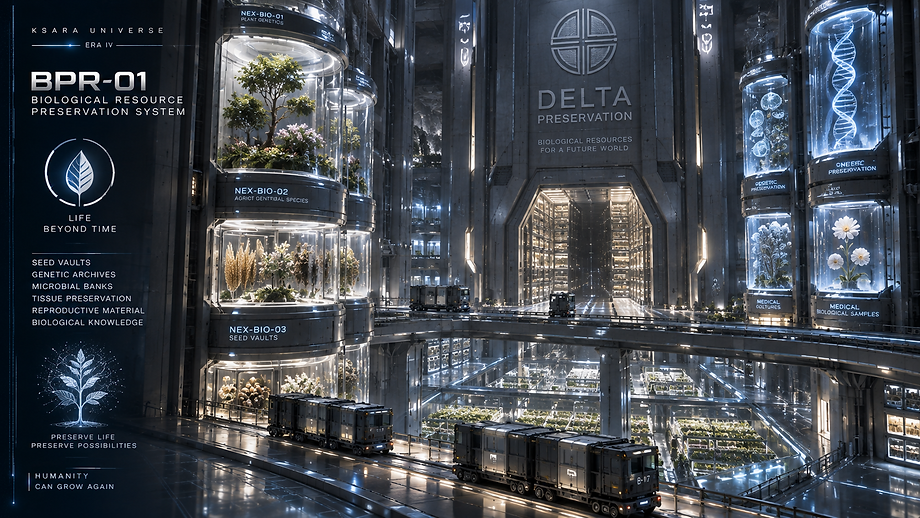
“Click the archive panel to expand the visual archive.”